
Solana’s “Official” Inflation vs. the Real, Lived Inflation
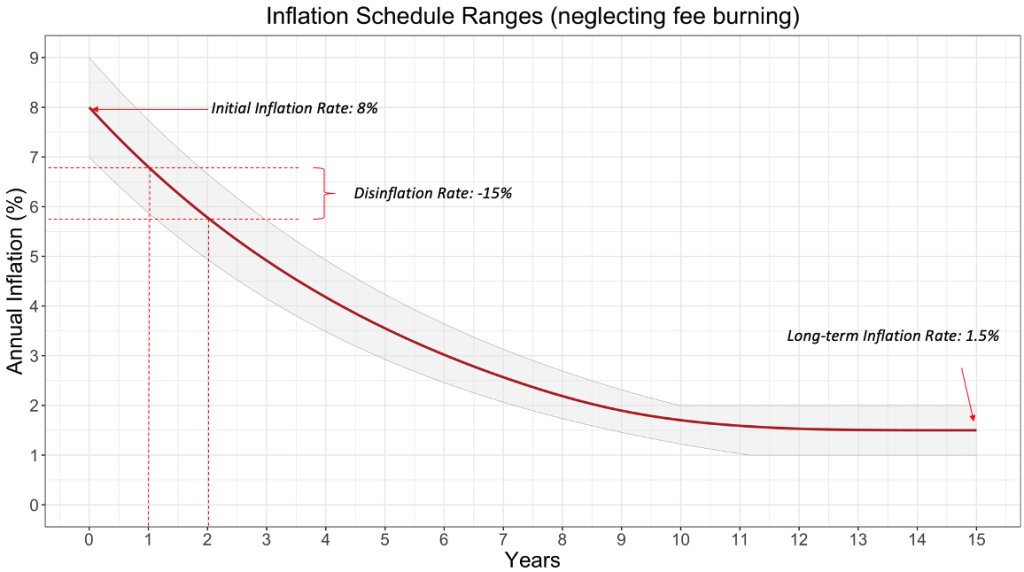
Most dashboards show a single “inflation rate” for Solana. That number isn’t wrong—it just describes policy minting, not the growth of tradable (circulating) supply that markets actually feel. In this article, we will take a look at theese two sides of the same coin and explain the differences.
1) What the official inflation rate is
Solana’s protocol sets an annual inflation parameter and mints new SOL proportionally over time, distributing it to the staked set (validators + delegators). Conceptually:
r_annual— protocol’s annual inflation parameter (decimal, e.g., 0.07 for 7%)S_start— total SOL supply at the start of a periodΔt— length of the epoch (seconds)Y— seconds per year (e.g., 31,536,000)
Exact time-proportional mint for one epoch
Mint_epoch = S_start * ( (1 + r_annual)^(Δt / Y) - 1 )Annualizing across many epochs reproduces the official or policy inflation. That figure answers:
“At the current schedule, how much new SOL does the protocol mint per year?”
Important: This is about minted supply by design. It does not attempt to measure the market float.
2) Why “policy minting” ≠ “what the market feels”
Two parallel ideas often get conflated:
- Monetary (total) supply inflation — how much the total supply changes after accounting for burns and other adjustments.
- Circulating (float) inflation — how much the tradable/circulating supply changes, which also depends on unlocks and treasury movements.
The official number targets minting; net supply and circulating each add their own layers.
3) Circulating (float) inflation (market view)
Many readers care about the growth of circulating supply—the coins that can trade. Unlocks and treasury moves matter here.
Let:
Circ_T0,Circ_T1— circulating supply at start/endUnlocks— previously non-circulating SOL that entered circulationRelocks— SOL that left circulation (vesting/escrow/treasury moves)Treasury_Moves— any policy-relevant reclassifications affecting float (foundation spending, grants, etc.)
Observed change:
ΔCirc_observed = Circ_T1 - Circ_T0You can decompose it (optional, for clarity):
ΔCirc_observed = (Real_Issuance - Burns_effect_on_circulating) + Unlocks - Relocks + Treasury_MovesThen the float inflation rate:
CircInfl_window = ΔCirc_observed / Circ_T0
CircInfl_annualized = (1 + CircInfl_window)^( Seconds_per_year / Seconds_in_window ) - 1
Key distinction: Unlocks and treasury distributions do not mint new SOL; they change who can sell it, so they affect circulating, not total supply.
4) Reconciling the perspectives
- Official (policy) inflation: what the protocol intends to mint per year.
- Circulating inflation: how the tradable float changed after unlocks/treasury activity and burns.
Bottom line
The official Solana inflation rate isn’t wrong—it’s just a policy measure of minting. Markets often care more about net supply (after burns) and circulating float (after unlocks/treasury moves).